
Mobile Home Site Prep Cost in North Carolina
Published cost data from HomeGuide puts preparing the property for a manufactured home at about $4,000 to $11,000. HomeGuide says the land clearing, excavation and grading the lot needs set where it falls. The foundation, setup, well and septic are separate bills.
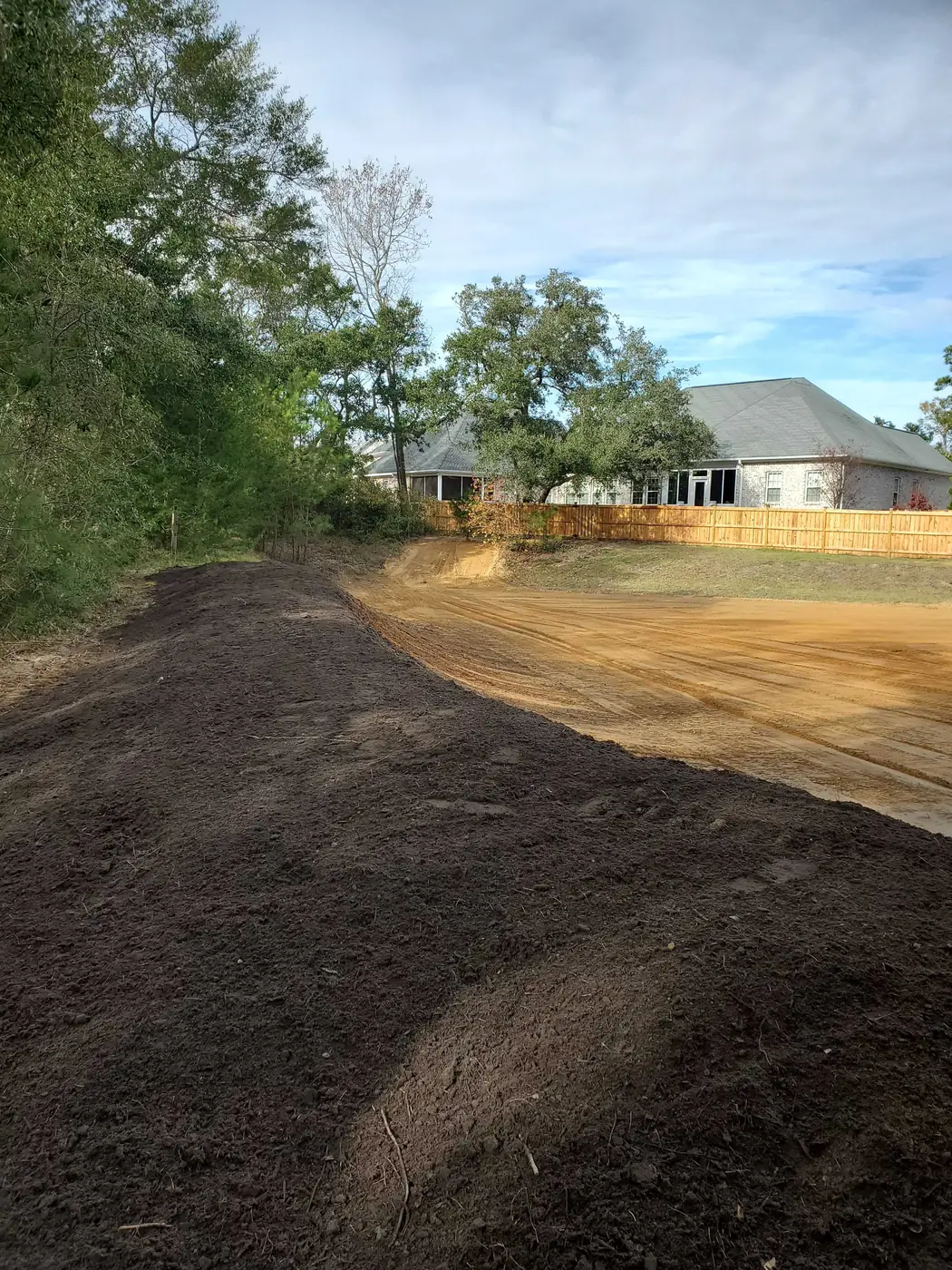
North Carolina’s manufactured home rules also spell out what the ground under the home must look like. Our site prep work covers that dirt side in Pender, New Hanover, Onslow, Brunswick and Duplin counties. We clear the lot, pull the stumps, grade it to drain and pack the pad. The installer sets the home after that.
What Does Mobile Home Site Prep Cost?
The table sets the dirt work beside the jobs other trades do.
| Work item | Published cost range | Who does it |
|---|---|---|
| Preparing the property | $4,000 to $11,000 | Dirt contractor (us) |
| Land clearing | $1,400 to $4,000 | Dirt contractor (us) |
| Excavation | $1,600 to $4,400 or more | Dirt contractor (us) |
| Land grading | $600 to $2,000 | Dirt contractor (us) |
| Gravel or concrete pad | $1,200 to $4,000 | Us for gravel; a concrete contractor for concrete |
| Driveway construction | $1,700 to $7,000 | Us for a gravel drive |
| Permanent foundation | $3,000 to $36,000 | Your installer or a foundation contractor |
| Full-service delivery and assembly | $2,000 to $14,000 | The dealer or installer |
| Well and septic system | $6,000 to $20,000 | Well and septic contractors |
| Building permits | $500 to $2,000 | The property owner or the installer applies |
Sources: HomeGuide’s mobile home cost guide, and Angi’s site preparation cost guide for the pad.
The first row covers the clearing, excavation and grading rows under it, so do not count them twice. These are averages from national cost guides. A price for your lot comes from looking at it. Our site prep cost guide breaks down stump, fill and culvert costs for a site-built house.
What Do North Carolina’s Rules Say About the Ground Under a Mobile Home?
NC OSFM says new manufactured homes are installed using the manufacturer’s installation instruction manual. The state’s Regulations for Manufactured Homes cover any area that manual leaves out. Their section 3.3 covers site preparation.
Under section 3.3.3, all vegetation under the home is cut to 2 inches or less above grade. Roots and stumps are cut to grade level. Stumps and other organic material come out where the footings will sit. We pull stumps out with the excavator during clearing.
Section 3.3.4 deals with water. The ground under the home and at least 10 feet around it is graded so no water collects and stands. Outside the home, the grade slopes at least 1/2 inch per foot for 10 feet on each side. That works out to at least 5 inches of fall.
Where a property line or a slope leaves no room for that, the rules allow drains or swales instead. Every pocket under the home gets filled, and the ground has to be reasonably smooth. The site also has to be protected from runoff from the land next door. Because the drainage rule reaches 10 feet out, we clear and grade an apron around the footprint as well.
Who Pays for Grading Before the Home Arrives?
Section 3.3.1 says the installer should inspect the site well before the home arrives. The installer looks for poor soil, severe slope, uncompacted fill and similar problems. If the site needs extensive grading to drain, the homeowner arranges and pays for it, unless the contract says otherwise.
That is why the dirt work comes before delivery day. Our part ends at a cleared, graded and drained site with a packed pad. From there, the installer sets, blocks, levels and anchors the home. The foundation and assembly lines in the table belong to that side of the job.
How Is a Mobile Home Pad Built on Low or Soft Ground?
Standing water is the usual problem on flat coastal lots. On low or soft ground, we haul in fill dirt and stone by the load with our dump truck. We spread it in layers with our machines and pack each layer before the next one goes on.
Packing matters here. Section 3.3.1 lists uncompacted fill among the problems that can call for a soil testing agency or an engineer.
Angi puts gravel or concrete pad installation at $1,200 to $4,000. We build the dirt and stone side of that through our grading and dirt work. Concrete goes to a concrete contractor.
What About the Driveway and Drainage?
The home arrives on a truck, and that rig needs a firm way in. A gravel driveway cut, graded and stoned before delivery gives it one. HomeGuide lists driveway construction at $1,700 to $7,000 among its mobile home add-ons.
If the new drive connects to a state road, read our NCDOT driveway permit guide before any work starts. The property owner applies for that permit.
Where the slope from section 3.3.4 will not fit, swales and ditches carry the water away. A culvert under the drive keeps the roadside ditch flowing. That falls under our driveway culverts and drainage swales work.
What If an Old Mobile Home Is Still on the Lot?
The old home has to come off before the new one goes in. Our mobile home demolition work takes it down and loads the debris into our dump truck to haul off. If you want the pile left on site, we can leave it there.
After the teardown, the old spot is often uneven. We level it, fill the low places and grade the lot as part of the same job.
Which Permits and Flood Rules Apply to a Mobile Home Site?
Rules vary by county, and Pender County’s pages show what to check. Pender says you always need a zoning permit. It allows mobile or manufactured homes in its Rural Agricultural, Residential Performance and Manufactured Housing Community zoning districts.
Pender County’s Environmental Health specialists run the soil tests that decide whether a property can take a septic system. Under section 3.3.6, the installer checks the home’s spot against local rules, including its distance from the septic system. Settle the septic site before the pad location is final.
Pender’s flood ordinance requires a floodplain development permit before development in a special flood hazard area. Its definition of development includes filling and grading. Where the flood map sets a base flood elevation, a new or replacement manufactured home must be elevated. Its reference level has to sit at least 2 feet above that elevation.
Pender’s coastal high hazard (VE) and Coastal A zones are stricter. Manufactured homes are permitted there only in an existing manufactured home park or subdivision. Fill cannot be used for structural support.
Under state law, land disturbance of more than one acre needs an erosion and sedimentation control plan. The property owner applies for the zoning, septic, flood and erosion permits. In Onslow, Duplin, Brunswick or New Hanover, ask that county’s planning and environmental health offices the same questions.
Get the Lot Ready Before Delivery Day
We are based in Burgaw and have done land clearing and grading since 2013. Our excavators, tracked skid steer and dump truck do the dirt work. The estimate is free and comes from looking at the property, and scheduling is usually within days.
Call (910) 512-9578 and tell us when the home is due and where it will sit. Let us know if an old home is still standing, and where water stands after a hard rain.