
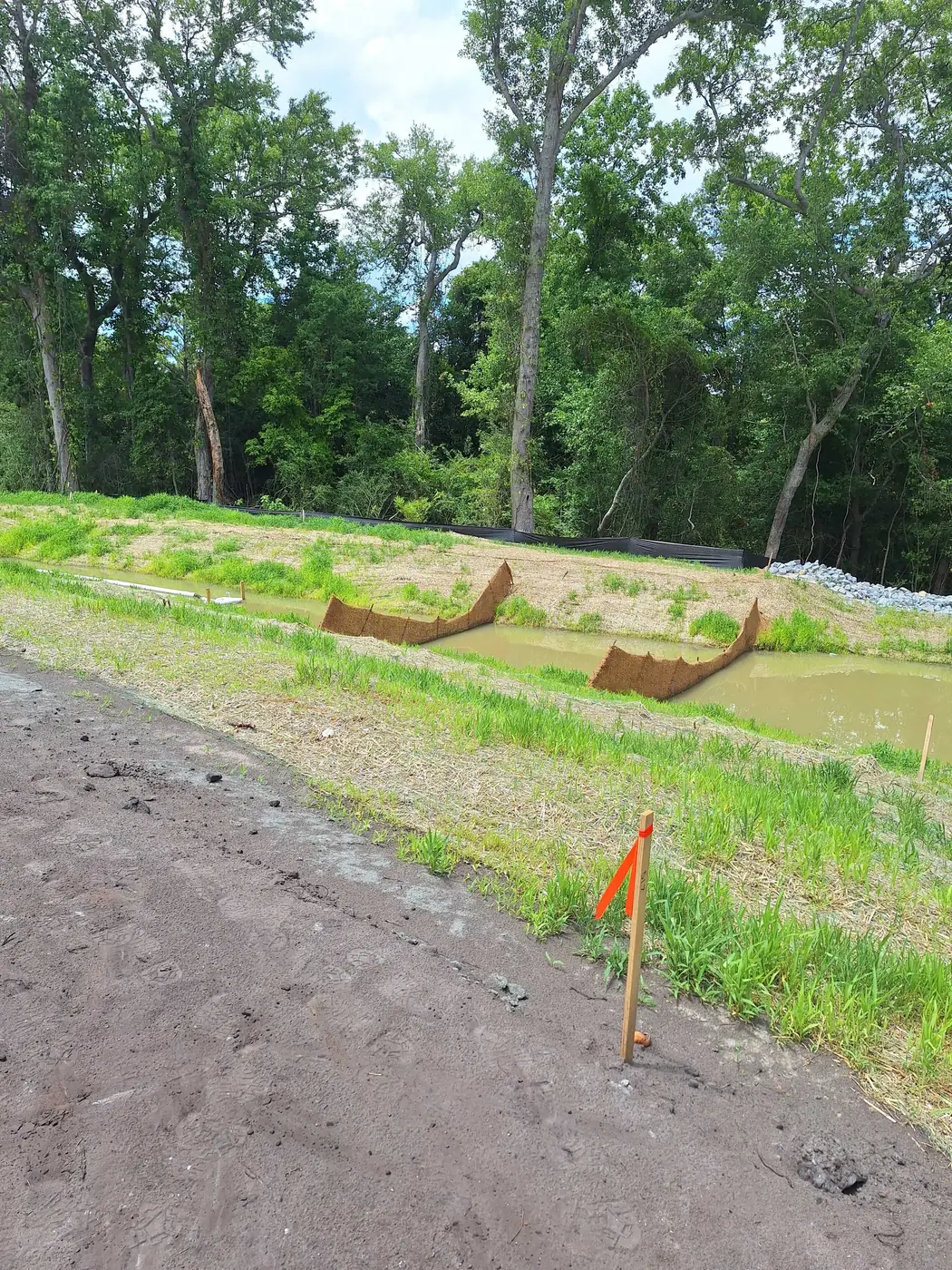
Driveway Culvert Cost in Coastal North Carolina
Published cost data from Angi puts driveway culvert installation at about $1,000 to $9,000, with an average of about $4,500. Angi says that pro price usually covers resurfacing the part of the drive over the pipe. HomeAdvisor puts culvert drainage for a driveway at $1,500 to $5,000. On the coast, who pays for which part can move the bill just as much.
On a state road, NCDOT installs the pipe for a qualifying home lot or farm entrance at its own cost. You buy the pipe and deliver it to the site. Where a private drive or farm lane crosses a ditch on your land, you pay the whole driveway culvert cost. We set those pipes as part of our driveway culvert installation work, and the estimate is free.
What Does a Driveway Culvert Cost?
| Cost line | Published figure | Source |
|---|---|---|
| Professional culvert installation | $1,000 to $9,000 | Angi |
| Average professional installation | About $4,500 | Angi |
| Culvert drainage for a driveway | $1,500 to $5,000 | HomeAdvisor |
| Culverts or drains on a new gravel driveway | $500 to $2,000 | HomeGuide |
| Plastic pipe, 24 inch by 20 foot length | $700, pipe only | Angi |
| Aluminum or galvanized steel pipe, 24 inch by 20 foot length | About $800, pipe only | Angi |
| Swale or ditch work | $5 to $15 per linear foot | HomeAdvisor |
Sources: Angi’s driveway culvert guide (updated July 2026), HomeAdvisor’s driveway and drainage guides, and HomeGuide’s gravel driveway guide.
Angi says its range moves with the length and type of pipe and your driveway material. Stone, rock or sod to line the ditch may or may not be in that price. HomeGuide’s $500 to $2,000 is one line in a gravel driveway budget. The two pipe rows cover the pipe alone, before anyone digs.
Who Pays When the Drive Meets a State Road?
A driveway pipe in a state road’s right of way needs a written NCDOT permit under G.S. 136-93. The property owner applies, and our NCDOT driveway permit guide covers the steps.
The state’s driveway pipe rule, 19A NCAC 02D .0421, splits the bill by property type. For a home lot or a farm entrance, NCDOT installs your pipe at its own cost. One of its conditions is that the property has no access yet. Land being developed to sell counts as commercial.
NCDOT’s part ends at the pipe and the backfill that protects it. The rule says NCDOT is not obligated to build a finished driveway. So your share is the pipe and its delivery, plus the drive surface over it.
The District Engineer sizes the pipe for the flow expected in the ditch. That office keeps the approved list of pipe materials too. Pipe over 48 inches is yours to furnish and install.
Commercial property buys its own pipe as well. NCDOT then sets it for $10 per linear foot, which is $200 at the 20 foot minimum. The other route is a private contractor, with $50 paid to NCDOT for its inspection.
Which Pipe Can Go Under a Driveway Near the Coast?
Article 310-2 of NCDOT’s 2024 Standard Specifications keeps plain galvanized or aluminized corrugated steel pipe out of 24 eastern counties. Pender, New Hanover, Onslow and Brunswick are on that list. Duplin is not.
Article 310-4 counts pipe under driveways as side drain pipe. In those same counties, it restricts corrugated steel side drain pipe, whether plain, galvanized, aluminized or otherwise coated. It also calls for at least one foot of cover. Reinforced concrete, corrugated aluminum alloy, polypropylene, HDPE and PVC pipe appear on its side drain list too.
NCDOT wrote these specifications for its construction contracts. Its driveway policy says all work and materials in the right of way must meet or exceed them. For a driveway pipe there, ask the District Engineer’s office which material fits before you buy.
Angi calls galvanized steel ideal for high traffic, but prone to rusting that can create weak spots. Aluminum and plastic will not rust, though neither is as strong as steel. Plastic is light and easier to install, and Angi says it suits low-traffic areas better.
What Size and Length Does a Driveway Pipe Need?
Angi’s national guide calls 10 or 12 inch pipe typical. On a state road, a 15 inch culvert pipe is the smallest NCDOT allows unless the District Engineer directs otherwise.
NCDOT’s policy adds the drive’s width at the ditch line, shoulder included, to what its side slopes need. Those slopes run no steeper than one foot down for every three feet across. A deeper ditch means longer slopes, so the pipe gets longer.
The minimum is 20 feet of pipe, so a 10 foot pipe is too short for a state-road drive. On a private crossing, the ditch and the water it carries set the size.
What Moves the Price on a Private Crossing?
On a farm lane, internal drive or private road NCDOT does not maintain, you carry the whole bill. Town streets can differ. Angi notes some cities maintain driveway culverts on their right of way, so ask the town first.
On a private crossing, these parts of the job move the price:
- Pipe diameter, since bigger pipe costs more.
- Pipe length, set by the drive’s width plus its side slopes.
- Ditch depth, which adds pipe length and fill.
- Rip-rap at the outlet, where water leaving the pipe would cut the bank.
- Stone or fill packed over the pipe, plus the drive surface on top.
- Re-cutting the ditch so water reaches the pipe and drains away. HomeAdvisor puts swale or ditch work at $5 to $15 per linear foot.
We set the pipe at ditch grade and pack fill over it in layers with our machines. Once it is covered, the crossing becomes part of the gravel driveway and gets the same packed stone.
Should You Repair or Replace an Old Culvert?
Angi’s guide says a rusted-out or damaged culvert is generally not worth repairing. A replacement takes less time and will likely outlast a repair. On a private lane, culvert replacement is your cost.
On a state road, call the District Engineer’s office first. Under NCDOT’s policy, a driveway pipe properly installed in the right of way under a permit becomes NCDOT property. For single-family homes, NCDOT provides new pipe to replace damaged pipe. Commercial owners cover their own replacements.
Road work can shift the bill too. If NCDOT moves or regrades a side ditch and causes the need, NCDOT covers the installation and its costs.
What Has to Happen Before Anyone Digs?
State law, G.S. 87-122, requires notice to NC811 before any excavation starts. The notice goes in at least three full working days before the work begins. Replacing an old pipe means digging too, so the same notice applies.
Planning a New Drive or a New Build?
On a raw lot, the culvert is one piece of site prep, along with clearing and the building pad. Setting the pipe early gives loaded trucks a firm way in from the road.
We are based in Burgaw and have done this work since 2013. Our excavators and tracked skid steer set the pipe and shape the ditch, and our dump truck hauls the stone. We work across Pender, New Hanover, Onslow, Brunswick and Duplin counties.
The estimate is free and comes from looking at the property, and scheduling is usually within days. Call (910) 512-9578 and tell us where water stands along the drive.