
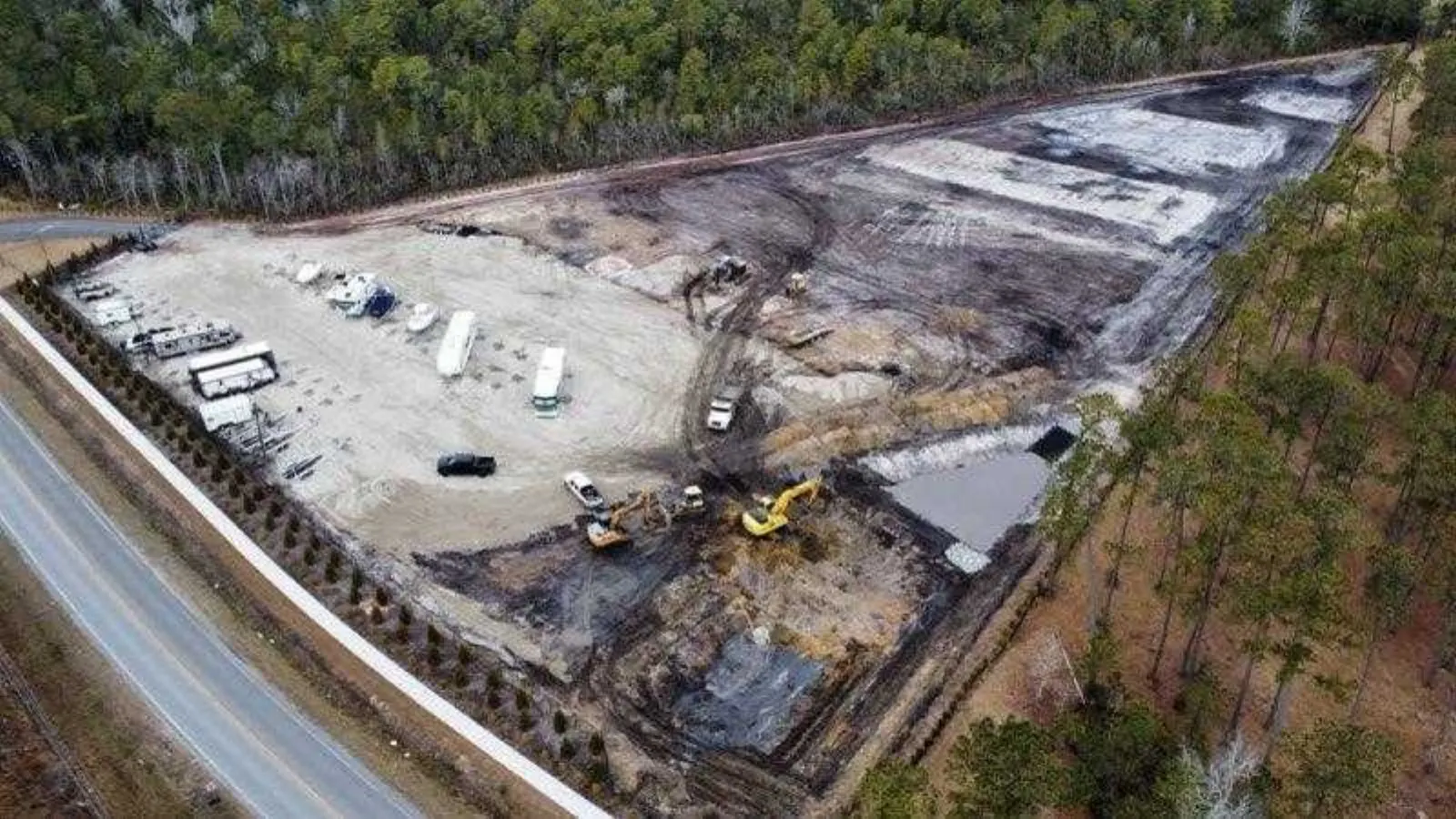
How Much Does Land Clearing Cost in North Carolina?
Across North Carolina, most land clearing runs about $500 to $8,000 per acre. Published 2026 cost data puts the common residential acre closer to $1,500 to $4,000. Light brush prices near the bottom. Standing hardwood prices near the top.
That spread is real. An acre of old pasture and an acre of mature pine need different machines and different hours. Nobody can price an acre from a satellite photo.
What follows is the market data, plus the site conditions that move a quote up or down. This guide breaks the number into parts you can read on your own property.
What does land clearing cost per acre by growth density?
Density drives price more than anything else. Here is how market ranges stack up by what is growing.
| Growth on the acre | What you see | Market range per acre |
|---|---|---|
| Light brush | Briars and saplings under 2 inches | $500 to $2,500 |
| Medium brush | Thick undergrowth with pine and gum under 6 inches | $1,500 to $3,500 |
| Wooded lot | Standing woods, most trunks under 12 inches | $2,500 to $4,500 |
| Heavy timber | Mature hardwood with deep root balls | $3,300 to $8,000 |
| Full site prep | Everything cut, stumps out, ground shaped | $4,000 to $8,000 and up |
Those figures come from national and North Carolina cost guides published in 2026. They describe what the market charges. Your acre gets its own number after someone looks at it in person.
Read the row that matches your ground. The rest of this guide explains where inside that range you land.
Why do two acres in the same county price differently?
Per acre averages assume a machine runs without stopping. Real sites stop the machine.
A lot with road frontage costs less than a back lot behind a narrow trail. Power lines and septic fields slow the work down. Slope and soft ground slow it further.
Small jobs also carry setup cost. Market data shows mobilization near $300 to $1,500 on its own. Many operators hold a job minimum around $1,500 to $3,000. That is why a quarter acre and a full acre can quote close together.
Acreage works the other way. Five acres usually prices lower per acre than one, because setup spreads across more ground. A single acre carries the whole setup by itself.
How much does debris handling add to the bill?
This is the part people miss. Cutting is the fast half of the work. Getting the wood off your ground is the slow half.
You have a few options, and they price differently:
- Haul it off. Market data puts trucking near $500 to $2,000 per acre, plus dump fees.
- Burn it on site. Where a county allows it, burning runs about $200 to $800 per acre.
- Grind it in place. Chipping or mulching the material runs roughly $500 to $2,500 per acre.
Grinding keeps the wood on your ground as chips. That chip layer holds sandy soil down while grass comes back. Hauling costs the most because a dump truck holds only so much, and dump fees stack up load by load.
Ask which option your quote assumes. Two bids on the same acre can sit thousands apart just on this line.
Does the price change across North Carolina?
North Carolina covers three landscapes, and the ground under the machine differs in each.
In the mountains, slope is the cost driver. Steep ground slows every pass and limits which machines can work safely.
In the piedmont, clay is the driver. Clay holds rock and turns slick when wet, so stump work and hauling take longer.
On the coastal plain, water is the driver. The ground sits low, the water table is high in spots, and timing matters more than slope.
What permits do you need before clearing land in North Carolina?
One rule sets the line for most projects. North Carolina requires an erosion and sediment control plan when more than one acre on a tract will be disturbed.
That plan is due at least 30 days before work begins. It has to be approved before any dirt moves. The state can fine up to $5,000 per day per violation for clearing without one. Some counties run their own local program under the same law.
Two more checks belong on the list:
- Wetlands. The US Army Corps of Engineers Wilmington District handles Section 404 permits for waters and wetlands in North Carolina. Fill or dredged material in a wetland needs authorization first.
- Burning. The North Carolina Forest Service issues burn permits. Only vegetative material may be burned.
What is different about clearing land on the coast?
Sandy soil cuts easy and moves easy. Bare sand also washes in the first hard rain. Getting cover back on the ground quickly keeps your topsoil where you want it.
Low ground holds water under that sand. Soft spots mean tracked machines and slower passes. Some sites need a mat road built into the work area. Others need a wait for dry weather.
Pine flatwoods change the stump work. Pine roots run shallow and wide. They pull faster than hardwood, but they leave more surface to smooth out with grading and dirt work.
Storm season leaves leaning pines and hung limbs across Pender, New Hanover, Onslow and Columbus counties. Those get dropped before a machine works under them. That adds hours to a job that looked simple from the road.
Brush comes back fast in this climate. A cleared lot grows back thick if nothing touches it. Keeping it open with bush hogging costs far less than clearing the same acre twice.
Is forestry mulching cheaper than clearing and hauling?
Often it is. Forestry mulching grinds standing brush and small trees right where they stand. Nothing gets loaded and nothing goes to a landfill.
Market data puts mulching near $1,000 to $3,500 per acre, or roughly $150 to $300 per hour. Cut and haul clearing on the same acre usually costs more once truck time and dump fees land. Cost guides put that saving at $500 to $2,000 per acre.
Mulching also helps where trucks cannot get in. Fewer loads means less damage to the ground you are keeping.
Mulching has limits. It handles brush and smaller trunks well. Big hardwood and stumps you want gone still call for an excavator and stump grinding.
What should you ask before you sign a land clearing quote?
Four questions separate a firm price from a guess:
- Where does the debris go, and is hauling included in the number?
- Are stumps ground below grade, pulled out, or left in the ground?
- Who files the erosion and sediment control plan if the job crosses one acre?
- Is the ground left rough, or shaped for what you plan to build?
Bids that answer those four rarely move much after the work starts. Bids that skip them tend to grow.
Get a free estimate on your property
We run land clearing out of Burgaw and have since 2013. The person who answers the phone is the person running the machines. We cover Pender, New Hanover, Onslow and Columbus counties.
Call (910) 512-9578 with the address and rough acreage. Estimates are free. We come out and look at the site in person. Then you get a written price.